High Plains Gardening
The gardening website of the Texas High Plains Region




Main blooms primarily during the months of July (last half), August and September, sometimes into the first part of October.
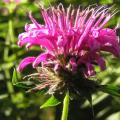
An American native requiring medium to high water, it is a prolific grower, an old fashion pass-along plant. Perfect for a mixed border or at the edge of the vegetable garden to attract bees. The variety shown is most likely 'Violet Queen', although I'm unsure. However, it is not the common scarlet bee balm or red bergamot, that also grows well here. Blooms throught the summer and is an attractive addition.
Prairie dropseed is smaller than both alkali or giant sacaton, more fitting for the city garden. A warm season bunch grass, prairie dropseed is a most attractive low or medium water-use grass with graceful green foliage. The seed heads emerge in late summer into fall with light pink seeds, that is said to naturalize some, but not invasively. A slow grower. Foliage turns a pleasing golden orange in the fall. Native throughout the Great Plains, including Texas. Tolerates most soil conditions.
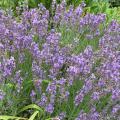
Outstanding shrubby perennial fragrant herb for the garden! Very good soil drainage is the key to growing lavender, it does not like moist, compacted clay soil. Lavender appreciates supplemental irrigation every 2-4 weeks, if not provided naturally. Trim back in late winter or early spring by not more than a third, or just trim down last years flower stems. Triming too much off the plant will kill it.
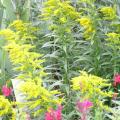
Native to a large part of North America, golden rod is a pleasant addition to your native garden, and contrary to popular myth, does not cause allergies; the pollen is too heavy to be wind born. But choose a variety of Solidago that does not have invasive rhizamatous roots for lower maintenance.
Attracts bees and butterflies.
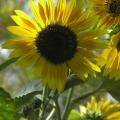
One of North America's favorite annuals. There is much variety in size and colors of flowers, ranging from yellow, golden, orange, red/orange, red and mahogany. The plants themselves can vary from 3-4 feet to 8 feet or more. Seeds sown in springtime will be insure blooms in late summer or fall. Great for cut flowers.
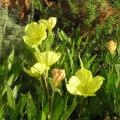
Oenothera macrocarpa, and O. missouriensis have been used interchangeably. Native over a wide range including the plains and wooded areas, carries the common name, Missouri evening primrose, bigfruit sundrops and Ozark Sundrops.
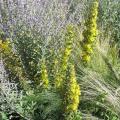
This variety purchased from Sunshine Nursery in Clinton, Oklahoma is drought tolerant, I've planted it in a low water-use bed. The flowers are so dense and golden, it looks like a golden torch. Sometimes seen as Solidago speciosa rigidiuscula, 'Wichita Mountains'
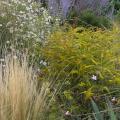
Solidago rugosa 'Fireworks', arching branches similar to S. canadensis 'Golden Baby', only is low water-use and more golden in color. Fireworks goldenrod will also flower in summer and again in the fall. Makes a great splash in the summer garden.