High Plains Gardening
The gardening website of the Texas High Plains Region




Soil that contains a high percentage of fine particles smaller than .002mm in diameter and colloidal substance and becomes sticky when wet. Clay soils can be mixtures of clay, sand and silt, with clay having the greatest percentage.
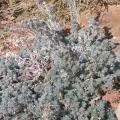
Lower growing Southwestern native shrub, both cold and heat tolerant. Finely cut greenish silver leaves. Flower stalks with insignificant flowers. Grows best in soils with good drainage. Will grow in heavy clay soil if grown among grasses.
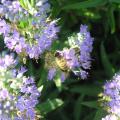
Rarely does a shrub feature as much versatility as the blue mist spirea. It will grow and flower in sun or shade, low water-use or high. This Caryopteris, a hybrid itself, normally blooms in a pleasant light blue, but other selections have deeper blues hues. Summer blooming into fall. And as unlikely at it seems for hybrid to set viable seed, blue mist spirea reproduces itself pleasantly, never invasively. Indeed, any little volunteers are welcome.
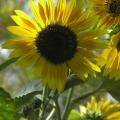
One of North America's favorite annuals. There is much variety in size and colors of flowers, ranging from yellow, golden, orange, red/orange, red and mahogany. The plants themselves can vary from 3-4 feet to 8 feet or more. Seeds sown in springtime will be insure blooms in late summer or fall. Great for cut flowers.
Virginia creeper, one of our pernicious native creepers, is a worthy low care vine for brilliant fall foliage and deep blue berries (highly toxic to humans) loved by birds. Virginia creeper normally spread by seeds in bird droppings, which is the method it came to my landscape. When spotted early, Virginia creeper easily pulls out, but if not spotted, within no time, it will cover a fence, climb a pole or cover an area. Which can be either a good thing or a bad thing, depending on one's view.
Curl leaf mountain mahogany is a medium height evergreen shrub native to elevations between 5000-10,000 feet throughout the Southwest. Small oval shaped dark green leaves lightly curl under at the margins are evergreen and aromatic. Small yellow flowers in spring time that develop into grain size fruits with a feathery tail attached to one end (similar to other mountain mahoganies). Slow growing and long lived, it can reach a height of 20 feet or more, but is more typically 6-12 feet. Densely branched. Cold hardy, drought and heat tolerant.
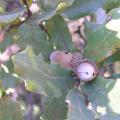
Shrub live oak, often a medium size shrub, is native to the Southwest and the Texas Panhandle typically found in canyons, rocky cliffs and hillsides. Sometimes called a holly oak, the leaves are 3-4 inches long, spine-tipped and holly shaped bluish green leaves. It is prolific in putting out acorns. Cold hardy, heat and drought tolerant.